Food aid is an important part of social welfare work
In Central Uusimaa, cooperation on food aid has been developed since 2024 between municipalities, the welfare region, organisations and parishes, coordinated by the municipality of Tuusula. Food distribution serves as material assistance and provides relief from financial hardship. Furthermore, food distribution points act as community meeting places that alleviate loneliness and offer peer support.
Text: Henna Kärki
Photographs: Henna Kärki and Pia Valonen
The ‘Food Aid Activities in Central Uusimaa 2025–2026’ project, now in its second year, is a state-subsidised initiative funded by the National Institute for Health and Welfare (THL) that supports the organisation of food aid activities utilising surplus foodand strengthens the continuity, accessibility and safety of food aid. In addition, the project promotes cooperation between stakeholders and aims to integrate food aid activities into other welfare work in the region.
The joint project involves all the local authorities in the region and the welfare district, as well as food aid organisations from all the local authorities in the region acting as co-implementers. The organisations and parishes acting as co-implementers, together with their networks, organise food aid activities, namely traditional food distributions and a variety of communal meals or coffee breaks. State subsidies are allocated to cover the costs arising from these activities, which are used, amongst other things, to cover the costs of food transport, storage and distribution, as well as the organisation of meals.
In 2025, a total of 88,000 euros in grants for organising food aid activities was distributed among 14 implementing organisations. The remainder of the grant, €93,000, will be distributed during 2026.
Cooperation enhances reliability and continuity
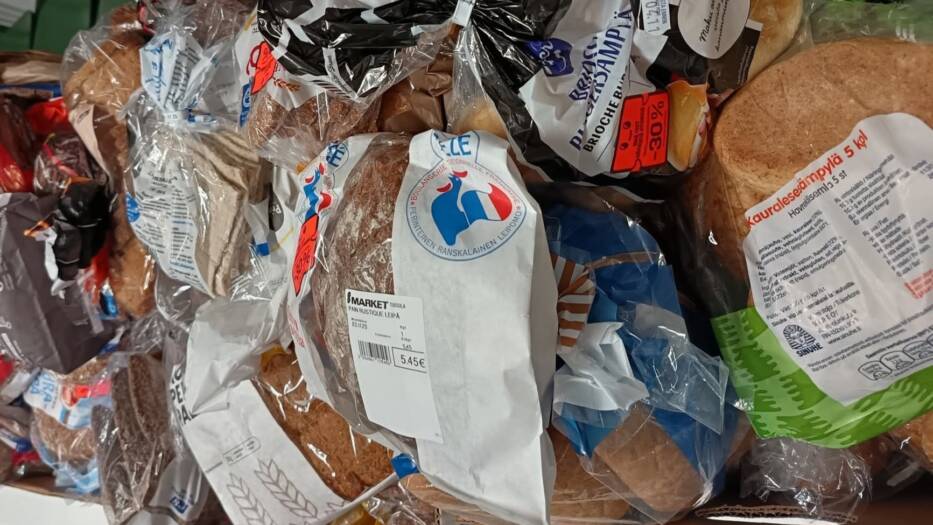
The joint project in the Central Uusimaa region has progressed smoothly through good cooperation, in line with its objectives. Cooperation and information exchange between stakeholders, as well as networking among food aid providers, have been promoted as part of the project coordination carried out by Tuusula Municipality. The project has actively maintained contact with stakeholders, promoted activities that facilitate cooperation, participated in local collaboration and organised regional meetings to share experiences and best practices.
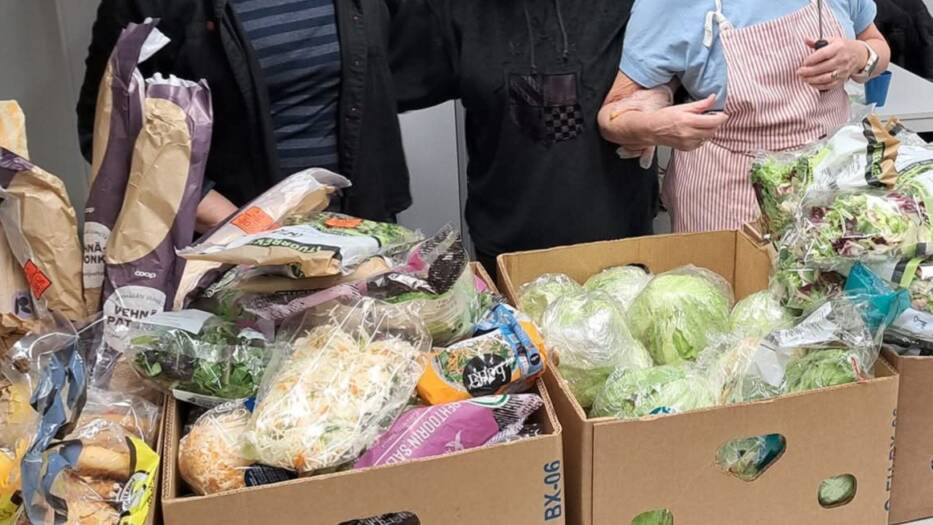
An example of practical network cooperation is the ‘Yhdessä katettu’ food aid network operating in our region, which has a shared food-waste terminal. Coordinated and centralised food-waste logistics support the responsible use of surplus food, as multiple organisations can utilise donated surplus food for food aid activities that promote inclusion and a sense of community.
The ‘Yhdessä katettu’ initiative is coordinated by the Tuusula parish, to which responsibility for it was transferred following the closure of Setlementti Louhela ry in autumn 2025. In 2026, the initiative is funded not only by the project itself but also by the Tuusula parish, the Järvenpää parish, the Hyvinkää parish and the Kerava parish, as well as the City of Järvenpää, the City of Kerava and the Municipality of Tuusula.
Food aid organisations involved in the project in Central Uusimaa
- Tuusula: Tuusula Parish, the Sininauha Foundation’s day centre, Kunnon Elämä ry, Eväskassi ry (operating until May 2026) and Autetaan yhdessä Tuusulassa ry.
- Järvenpää: Organisations within the ‘Yhdessä katettu’ network, including the Järvenpää Parish, the Arkki Free Church, Werkko ry, Kuumakillat and the Wärtsi Centre for Civic Engagement.
- Hyvinkää: Leivänmurtajat ry, Rusakot puskassa – kansalaisjärjestöjen tuki ry, and the Hyvinkää parish as part of the ‘Meeting Place for Everyone’ initiative.
- Mäntsälä: The ‘Bread for Life for Everyone’ initiative run by Leivän Tuki ry, as well as the Kirkonmäki breakfasts organised by the Mäntsälä parish and the EkoTeko food waste café.
- Nurmijärvi: Rajamäki Village Association, in collaboration with the parish, and the friendship evenings organised by the Nurmijärvi branch of the Finnish Red Cross.
- Pornainen: The Peace Association in collaboration with the parish.
Turning waste into a benefit in food aid
Food aid helps to reduce food waste by channelling donated surplus food to those in need. As waste from shops and factories has fallen, the number of food parcels distributed through food aid schemes has also decreased in recent years.
By contrast, the number of meals provided through food aid has increased as the use of school canteen waste has grown. In Central Uusimaa, too, the use of school canteen waste in food aid increased significantly over the past year. In Tuusula, Järvenpää and Mäntsälä, a total of over 3,000 kilograms of school canteen waste – equivalent to just over 10,000 portions – was channelled into food aid.
Key figures for food aid activities 2025
Stakeholders involved in the project in 2025:
- organised 3,563 food aid events
- There were 166,247 participants at the events.
The following food aid was provided:
- 258 229 food parcels or batches distributed
- 84,911 meals served
More than just food
As well as providing food, food aid schemes offer opportunities for social interaction, a sense of community and inclusion, as well as the chance to take part in voluntary work or activities that promote employment. As well as material assistance, there are often other activities on offer, opportunities for conversation and peer support, and information about local activities and services.
One of the aims of this partnership is to integrate volunteer-based food aid into the region’s social welfare work and to raise awareness of the need for assistance and the capacity of organisations to meet those needs.
The needs and perceived well-being of food aid recipients were assessed in the thesis *Towards More Effective Food Aid – The Needs of Recipients of Food Distributions in Central Uusimaa* (Autero, Salmi).
According to the thesis, the key needs of those using food aid services relate to financial support and social contact. Food distribution schemes serve both as a form of material assistance, providing relief from financial hardship, and as community meeting places, alleviating loneliness and offering peer support.
The thesis concludes that food aid has become an established part of social welfare work and that its effectiveness can be enhanced by developing the work in a values-based manner, whilst strengthening cooperation between different stakeholders.
Further information
Activities are partially on hold during the summer and will resume with a wider range of services in August. Up-to-date information on food aid can be found on the organisations’ own websites and social media channels. Another good source of information is the Ruoka-apu.fi website, which serves those seeking and organising food aid, as well as food donors.
Further information on the project is also available from the project coordinator, Henna Kärki, email henna.karki@tuusula.fi, telephone 040 314 3080.
This content has been translated using AI