Our Kolsa School
On this page, we provide more information about Kolsan School and its practices.
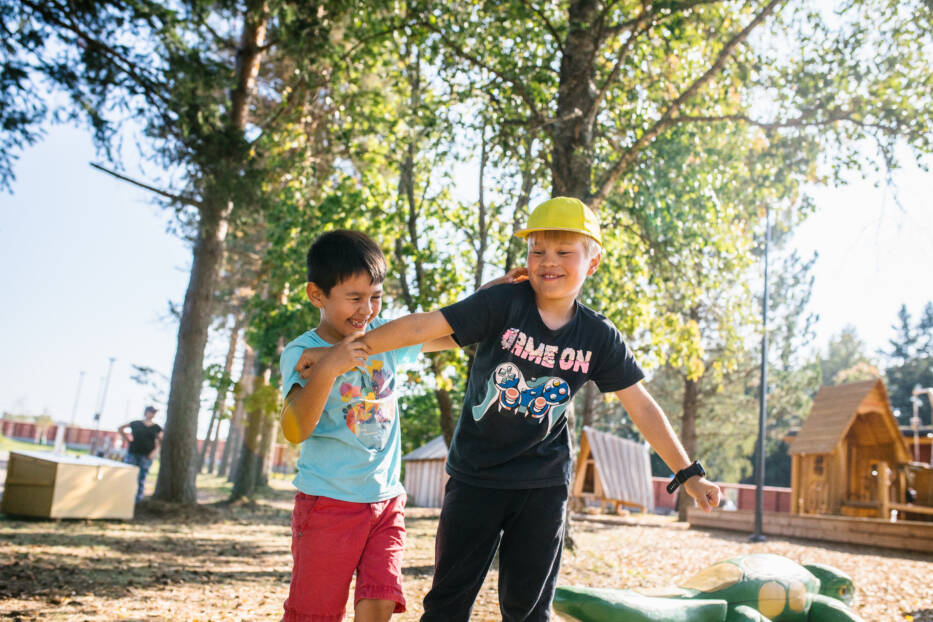
In the 2024–2025 school year, Kolsan School will have approximately 120 pupils in basic education.
Communication with the school
We use Wilma(switch to another service) to communicate between home and school.(switch to another service) The best way to contact teachers is through Wilma.
The email addresses of teaching staff are in the format etunimi.sukunimi@tuusula.fi.
Deputy Headteacher Anu Piira, +358 40 314 4073
Teachers, +358 40 314 4074
Special needs teacher, +358 40 314 4082
Rules and regulations
Purpose and application of the rules of conduct
In accordance with Section 29 of the Basic Education Act, Section 40 of the Upper Secondary Schools Act and Section 80 of the Vocational Education Act, the purpose of the rules and regulations is to promote inte al order within the school, the smooth running of studies and the safety and comfort of the school community.
School hours include the school day according to the timetable, school meals, breaks, and school-organised trips, camps, sports days, celebrations and other events, as well as a 15-minute break before and after the school day according to the timetable. Students may arrive at the school grounds 15 minutes before the start of the school day. After the school day ends, students may remain on the school grounds for 15 minutes.
The school area includes school buildings and playgrounds, as well as other facilities and places where teaching takes place. A map of the school area is attached to the rules and regulations.
Pupils’ rights and responsibilities
Equality and equal rights of pupils and other rights
- Every student has the right to participate in education safely.
- Every student has the right to equal and fair treatment.
- Every pupil has the right to participate in school activities and development and to express their opinion.
- Every student has the right to student welfare services and lea ing support.
- Every pupil is entitled to a free meal.
- Every student has the right to interpretation and assistance services and assistive devices necessary for participating in education.
- Every student has the right to free accident treatment.
- Every pupil is entitled to school transport and accommodation if the conditions are met.
Pupil responsibilities
- Every student is obliged to attend classes according to the timetable and to complete the assignments given by the teacher carefully during school hours and homework during their free time.
- At our school, we act with consideration for our own and others' safety and follow the instructions of adults.
- Every member of staff and student shall behave in a friendly, fair and respectful manner towards all students and staff at the school.
- Every student shows consideration for others, uses appropriate language, observes good manners and allows others to study and work in peace.
- You must not hit, kick, insult or say mean things to others.
- At our school, no one bullies or discriminates against others. If you are being bullied or notice bullying, tell an adult at school. An adult can be a teacher, school counsellor, school coach, curator or headmaster.
Safety, comfort and unimpeded lea ing
Good behaviour
- At school, good manners are observed, others are taken into consideration, and instructions are followed.
- Students must dress in such a way that they can safely participate in lessons. The teacher will provide more detailed instructions on how to dress for different lea ing situations, taking safety and hygiene into account.
- No text or images may be copied into student work without permission and without citing the source.
- You must arrive on time for lessons.
- It is not recommended to bring toys or other items to school that are not needed during the school day.
- If you bring toys or sports equipment to school, they must be kept in your backpack or on the coat rack and may be used during the school day with the teacher's permission. Scooters, bicycles, etc. must be stored in the designated bike racks.
Staying and moving around
- Pupils must spend their breaks in the break area and follow the instructions given by the break supervisor.
- Pupils are not allowed to leave the school grounds during the school day without the permission of a teacher or other adult member of staff.
Keeping things tidy and looking after the environment
- Each pupil is responsible for taking care of the environment and keeping the school and school grounds tidy.
- Every pupil must take good care of school property and lea ing materials.
- Students must remove their shoes in the entrance hall/hallway before entering the classroom.
- Outerwear should be stored on the coat rack.
Safety
- For safety reasons, mopeds, bicycles and scooters must be left in the designated areas in the schoolyard during the school day.
- The school recommends that pupils in Years 1 and 2 do not cycle to school without an adult. Helmets must be wo on school cycling trips.
- You are not allowed to throw snowballs, sticks or stones in the schoolyard.
- Walk in the school corridors.
Intoxicants and dangerous objects
- The possession and use of tobacco products, electronic cigarettes, alcohol and drugs is prohibited.
- No bladed weapons, fire-making equipment or other dangerous items, or items designed to cause harm to others or damage property, may be brought to school.
Energy drinks, soft drinks, sweets and other treats
- Snacks may be eaten with the teacher's permission during the time specified by the teacher and in the place designated by the teacher.
- Chewing gum is not allowed during lessons.
- It is not recommended to bring soft drinks, sweets, chocolate or crisps to school without the teacher's permission. Energy drinks are prohibited.
- If you bring energy drinks, soft drinks, sweets, chocolate or crisps to school, they must be kept in your school bag.
- If you bring soft drinks, sweets, chocolate or crisps to school, they must be kept in the cloakroom.
Educational measures, disciplinary measures, protective measures and other sanctions
- Failure to comply with the recommendations can be discussed with the student and communicated to their guardian.
- If a pupil behaves inappropriately, they may be summoned to a disciplinary meeting. If the inappropriate behaviour continues after the meeting or is more serious, the pupil may be given detention. If the behaviour does not change after this or is serious, the pupil may be given a written wa ing. The pupil may also be suspended for a fixed period if their behaviour is extremely serious.
- If a pupil disrupts teaching or other school events, they may be asked to leave the premises. If the disruption is unreasonable or the pupil threatens the safety of others, they may be excluded from teaching for the remainder of the day and the following working day.
Prohibited items and substances at school
- If a pupil has an object or substance that is prohibited or disrupts teaching, school staff may:
- To remove an object or substance.
- Check the pupil's belongings, storage spaces (e.g. locker) and clothing on the outside.
- This can be done if:
- It is clear that the pupil has a dangerous object or substance.
- The student refuses to hand it over when asked.
- The student is unable to reliably demonstrate that he or she does not have it.
- Failure to complete homework assignments may result in having to complete them after the working day.
- A pupil may be ordered to clean or rearrange school property that he or she has deliberately or carelessly dirtied or disordered (cleaning obligation).
Use of computers, mobile phones and other mobile devices
During lessons
- Mobile phones or other mobile devices may not be used during lessons, except with the teacher's permission for lea
ing purposes or with the head teacher's or teacher's permission for personal health care or as an aid.
- Mobile phones and other mobile devices must be kept in the pupil's bag during lessons and must be placed there immediately upon arrival at school.
- Mobile phones and other mobile devices must be kept in silent mode, and smartwatches must be kept in 'school mode'.
- Mobile phones and other mobile devices may be used during lessons if an adult gives permission.
- Students have the right to use their phones to monitor their health (e.g. for diabetes management).
- Mobile phones and other mobile devices may be used with the teacher's permission if the pupil has an urgent need to contact a guardian during the lesson, for example because the pupil has fallen ill. Pupils always have the right to call the emergency number in an emergency without the permission of school staff.
Breaks and other non-teaching time
- The use of mobile phones is prohibited during meals.
- Mobile phones and other mobile devices must be kept in the student's bag/backpack during breaks, meals and transitions.
- Mobile phones and other mobile devices must be kept in silent mode, smartwatches in so-called school mode.
- The use of mobile phones is prohibited during meals, celebrations, or other events.
- You may not use a phone or other mobile device to photograph or film another person without the permission of the teacher and the person being photographed.
- Mobile phones and other mobile devices may be used with the teacher's permission if the pupil has an urgent need to contact a guardian during the school day, for example because the pupil has fallen ill. Pupils always have the right to call the emergency number in an emergency without the permission of school staff.
Monitoring and reviewing rules and regulations
- These rules and regulations have been drawn up in collaboration with the entire school staff, pupils and guardians. All school staff and pupils undertake to comply with these rules and regulations and to work together to promote a safe and pleasant school day. Guardians support the school's pupils in complying with the school's rules and regulations and in ensuring a safe and pleasant school day.
- These rules and regulations are valid as of 1 August 2025.
- The rules and regulations are available on the school's website and on the notice board. The rules and regulations are discussed with the pupils each school year and guardians are informed of them. The rules and regulations are reviewed regularly.
School lessons and breaks
1st lesson: 8:15–9:00 a.m.
2nd lesson 9:00–9:45
3rd lesson 10:00–11:00
(lunch break in the middle of the third lesson)
4th lesson: 11:15–12:00
5th lesson: 12:15–13:00
6th lesson: 13:15–14:00
7th lesson 14:15–15:00
When the day ends with two arts and crafts lessons (physical education, visual arts, technical work/textile work), there are no breaks and the day ends at 12:45, 13:45 or 14:45.
School working days and holidays
Afte oon club
Kolsan School runs an after-school club for children in grades 1–2. The after-school club is open on school days from 12 noon to 4 p.m. The after-school club is run by Kolsan School’s school assistants. They can be reached by telephone on 040 314 3234.
Principles and objectives of the club’s activities:
The afte oon club’s activities are based on child-centred planning. Children are individuals and are treated equally in the club. Discussion and asking children for their opinions are part of our daily routine. We want to create a relaxed and enjoyable afte oon with the children and make the club “our club.” We do crafts and draw, and play is a very important part of our activities. Important goals of the afte oon club are to lea to pay attention to others and practise different ways of working together.
The objectives of the afte oon club are:
- provide safe, supervised and guided activities for pupils in grades 1–2
- enables parents to work
- support the educational work of schools and homes
- make the child feel safe when an adult is present, someone who will listen and also give a hug if comfort is needed
- teach children to take care of and take responsibility for their homework
- teach children to take care of their own belongings
- teach good manners, teach table manners
- teach them to consider others and form friendships – friends are not left alone.
Information about the activities and application process for afte oon clubs in the municipality of Tuusula can be found on the afte oon club activities page.
Prevention and investigation of bullying
Kolsan School is a ProKoulu school. Our school has an active ProKoulu team that engages pupils in a positive and inclusive operating culture.
ProKoulu is a school-wide operating model developed for the prevention of behavioural problems based on research data. Lea more about ProKoulu(switch to another service).
Supporting pupils
Student welfare work refers to all activities that support the school day and everyday studying. The school has a student welfare team (OHR), which is a multi-professional working group. The head teacher chairs the student welfare team.
The principal, a special needs teacher with a broad range of expertise, the school psychologist, the school counsellor, the school nurse and the teachers of the classes whose matters are being discussed participate in the OHR’s activities at Kolsan School. All classes are reviewed once a year by the student welfare team together with the class teachers. Parents are also welcome to discuss matters conce ing their own children with the OHR. The time for the discussion will be agreed separately.
The student welfare team’s task is to support high-quality basic education and a good school day, to nurture a culture that promotes growth and development, and to organise and provide students with support related to school attendance when needed.
School health care
School health care supports the growth and development of children and young people and aims to contribute to the development of values and attitudes that promote health. Health examinations are carried out annually for pupils, and health monitoring visits are carried out as necessary. If necessary, the school nurse provides acute care to pupils who fall ill during the school day and administers first aid in the event of accidents. However, actual medical care is not part of school health care but is provided at health centres.
School nurse Virpi Liukkonen. Contact via Wilma, email virpi.liukkonen@keusote.fi or telephone 050 497 0035.
The school doctor conducts health examinations for pupils in grades 1 to 5. Appointments with the school doctor are made by the school nurse.
Dental care for primary school pupils
All pupils in grades 1, 3 and 5 undergo an oral health examination and receive a treatment plan at the PopUp dental clinic at the school. If a child needs treatment, their parents will be notified of the treatment time. Follow-up treatments are always carried out at the dental clinic. Parents are responsible for transporting their children to the dental clinic.
In addition to PopUp dental check-ups, pupils are invited to dental clinics for oral health check-ups according to their individual needs.
Emergency dental services
Emergency dental services for those requiring urgent treatment (e.g. accidents, pain) operate by appointment and always require contacting the centralised oral health care appointment service on 019 226 0700.
School meals and special diets for pupils
Parents are responsible for notifying the school of any special dietary requirements. Please contact the school nurse (contact details in the School Health Care section), who will forward the information about special dietary requirements to the municipal Food Services. Please note that the diet can be implemented two days after the notification has been received by the school kitchen.
Our school also offers a vegetarian option every day.
Read the Tuusula municipality’s guidelines on special diets!
Hobbies and club activities
Schools organise hobby and club activities. Information about these is provided via Wilma and on the school notice board. School hobby calendars(switch to another service) can also be found on the municipality’s website.
Check out the hobby calendars(switch to another service).
Hobby and club activities are organised on the premises of schools and other operators, as well as online.
Plans
- Kolsan School Academic Year Plan
- Kolsan School's disciplinary practices
- Kolsan School's plan for protection against bullying and violence
- Kolsan School's equality and non-discrimination plan
Lost property
Lost property at our school is stored in boxes in the lobby. It is a good idea to label your clothes!
The lost property box is emptied twice a year for clothing collection. This is done after the Christmas and spring celebrations, so parents should check the lost property box at the latest during these celebrations.
More valuable items, such as watches, jewellery, keys and mobile phones, are taken to the school staff room.
This content has been translated using AI