Sacred nature comes to Halosenniemi
The ‘Sacred Nature’ exhibition at Halosenniemi opens on Tuesday 2 June. The exhibition explores artists’ perceptions of nature, ranging from Pekka Halonen’s landscape paintings to interpretations by contemporary artists. The common thread running through the exhibition is Halonen’s pantheistic relationship with nature. The theme of nature also manifests itself in many ways in contemporary art.
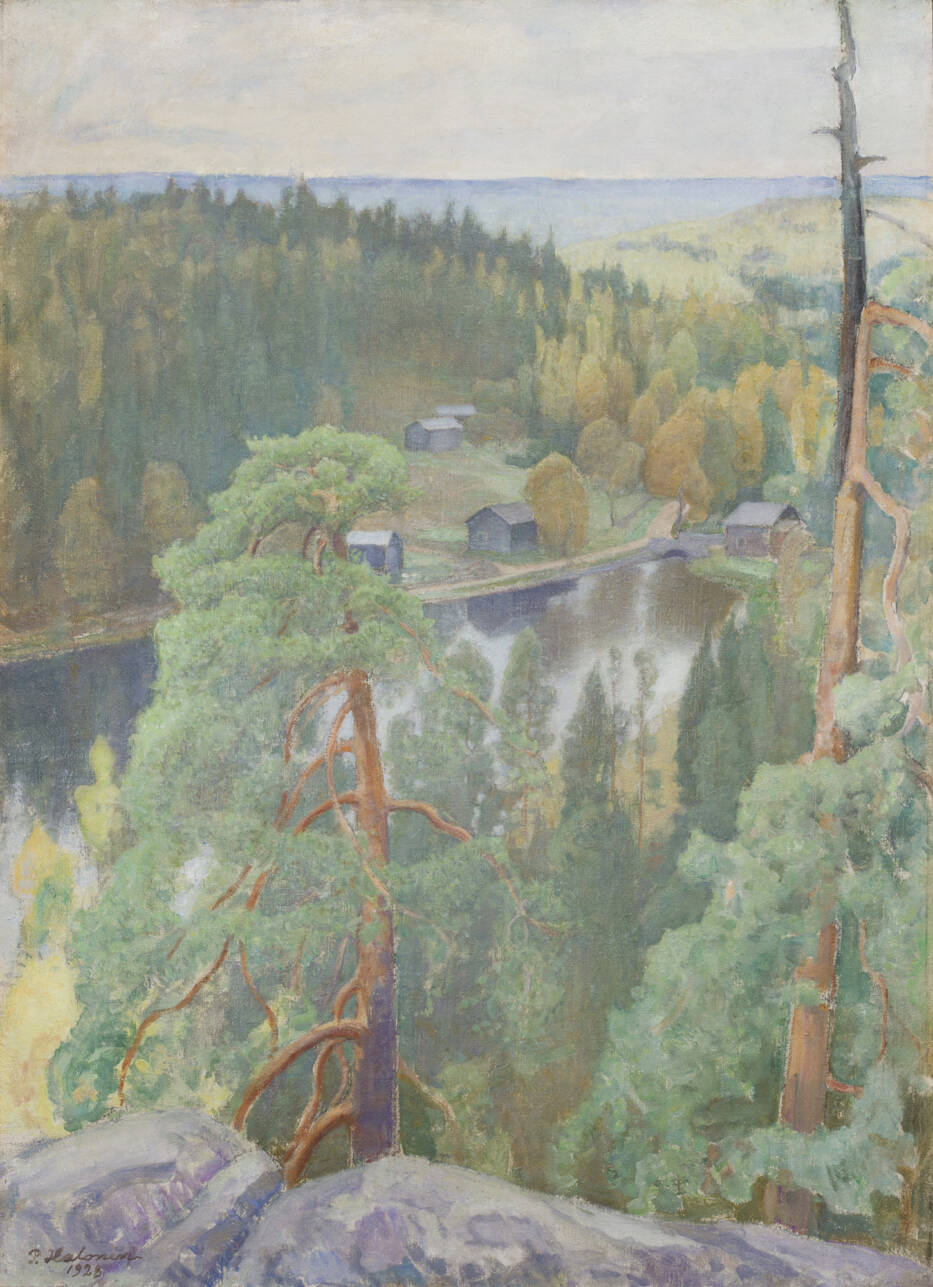
The rapid advances in the natural sciences during the 20th century laid the foundations for new technologies, which in turn brought with them a wide range of environmental problems. Humans are part of nature, yet have regarded themselves as superior to it. The primeval forests so admired by artists at the turn of the 19th and 20th centuries are becoming increasingly rare.
Nature was sacred to Pekka Halonen, and this sense of sacredness is conveyed in his numerous harmonious landscape paintings. Halonen’s deep affection for nature resonates with us at a time when we feel nature is under threat. Pekka Halonen was particularly influenced by his mother Wilhelmiina, who taught him to respect nature, from the trees in the garden to the animals. A tree close to Halonen’s heart was the rowan, which is also described in the Kalevala:
Blessed are the rowan trees in the garden, blessed are the branches of the rowan trees,
blessed are the leaves on the branches, and blessed above all are the berries.
Even during Pekka Halonen’s lifetime, the wilderness was under threat from the rapidly expanding sawmill industry. Axel Gallén wrote of the felling: “And when you see the mark on the side of a tree, signalling a death sentence for the next felling season, your heart aches.” Halonen, too, was moved by the fate of the primeval forests, as “the ruthless loggers of the modern age had laid them low for the sake of a few marks”.
Nature also inspires contemporary artists. Hannu Pakarinen’s monumental photographic work Kaski (2010) references Eero Järnefelt’s famous painting Kaski, or The Labourers (1893). Taneli Eskola’s photographs depict landscapes perceived as national landmarks or of cultural and historical significance. Markus Konttinen’s painting Eleitä ja välimatkoja (2009) evokes associations with Impressionism, such as Claude Monet’s water lilies. Samuli Heimonen favours a surrealist canine figure, which lends epic dimensions to the wolves of the wild. Susanna Maria Kivistö depicts nature expressively. She sums it up: ‘In my works, I depict how the experience of the sacred brings us the freedom we seek, as well as respect for all life and existence.’
Other artists featured in the exhibition include Vilho Askola, Olavi Hurmerinta, Outi Ikkala, Jari Järnström, Inari Krohn, Hannele Kylänpää, Kuutti Lavonen, Tuula Lehtinen, Maaria Märkälä, Lars-Gunnar Nordström, Tarja Polari, Ulla Rantanen, Pirkko Ropponen, Risto Suomi, Soili Talja, Milla Toivanen, Vive Tolli, Aukusti Tuhka, Helena Tynell and Martta Wendelin. The works in the exhibition have been drawn from the art collections of the Tuusula Museum and the Municipality of Tuusula, as well as from the collections of the Pekka Halonen Society and the L-G Nordström Foundation.
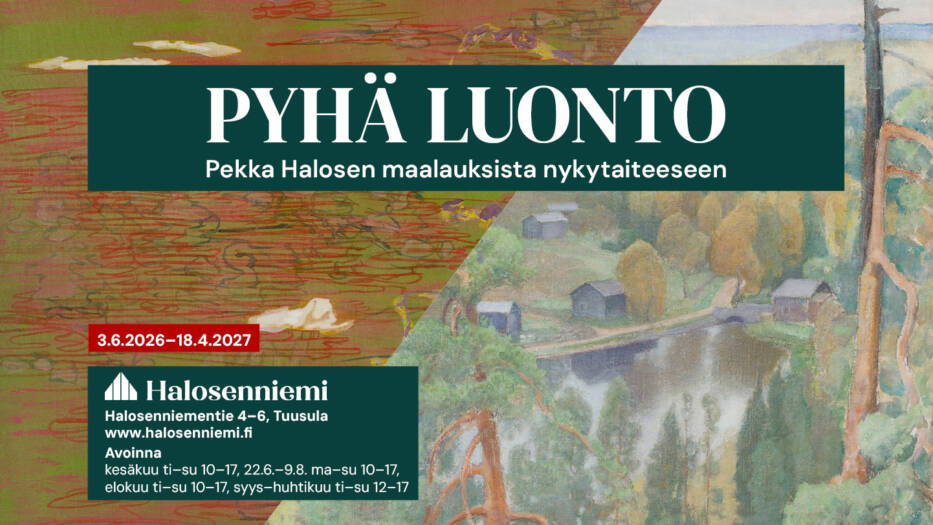
Sacred Nature – From Pekka Halonen to Contemporary Art
2 June 2026–18 April 2027
Halosenniemi
Halosenniementie 4–6 (Rantatie), Tuusula
Open
2–21 June, Tue–Sun 10am–5pm
22 June–9 August, Mon–Sun 10am–5pm
11–30 August, Tue–Sun 10am–5pm
September–April, Tue–Sun 12pm–5pm
Admission fees:
adults €14
pensioners and students €12;
children aged 0–18 €0.
Free admission with a Museum Card or Kaiku Card.
Guided tours
on Sundays at 2 pm in Finnish and at 3 pm in English.
From 1 May to 30 August, guided tours are also available on Wednesdays at 2 pm in Finnish.
Summer extra: From 22 June to 9 August, guided tours are available daily at 2 pm in Finnish.
This content has been translated using AI