Tuusula’s Action Plan for a Child-Friendly Municipality
Our joint efforts to create a more child-friendly municipality are guided by our action plan, which has been approved by UNICEF.
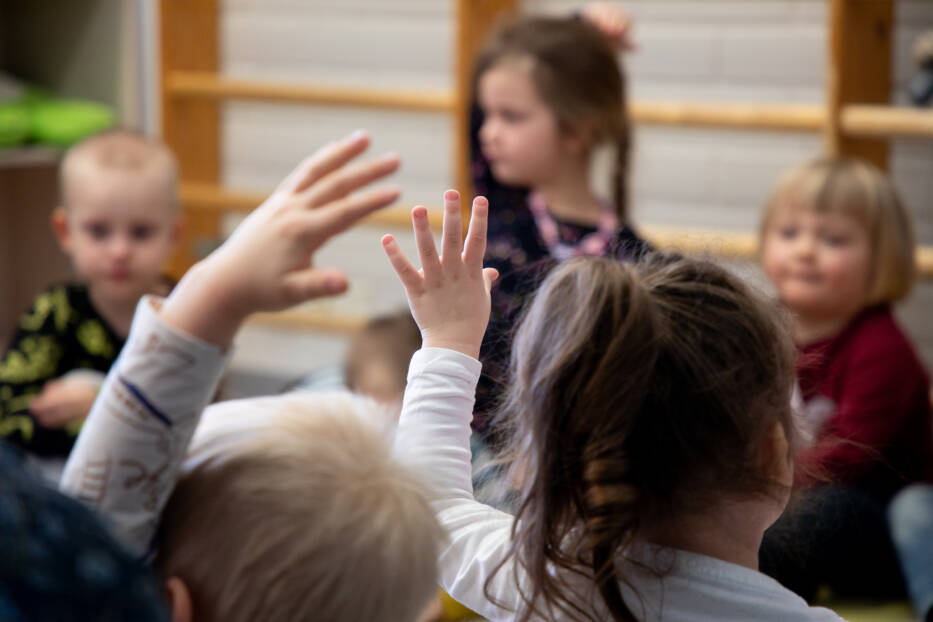
Tuusula Municipality’s ‘Child-Friendly Municipality’ action plan sets out a vision for a good life for children and young people, as well as five objectives with accompanying measures. Through these, we are working to embed children’s rights more firmly within our municipal structures.
In the vision, we highlight the ingredients of a good life:
- Children and young people feel that their views are genuinely taken into account. Children are equal members of the local community. Every child has equal opportunities to participate.
- Children and adults are provided with information about children’s rights. Children and young people are encouraged to get involved in civil society and feel that they are valued members of their local community.
- Tuusula promotes children’s rights in municipal decision-making, administration and services. Children and young people’s understanding of their own daily lives and child impact assessments influence municipal decision-making and development. Children can help plan, evaluate and develop municipal services. Measures targeting children are reflected in Tuusula’s budget.
Find out more about our objectives and the related measures by clicking the buttons below.
Access to hobbies and leisure activities for children and young people will improve.
Let’s improve access to hobbies and leisure activities for children and young people.
Measures:
- We will develop multilingual and multi-channel communication about opportunities for clubs, hobbies and leisure activities.
- We will introduce new ways to enable young people in Tuusula, particularly those aged 12–15, to get involved in planning and organising leisure activities and free time.
Children’s views and experiences influence the design of the environment.
In urban planning, children’s experiences and views are identified and taken into account. This approach is applied at various stages of the process and in various planning tasks, such as land-use planning and local planning, as well as in the design of other public spaces.
Measures:
- We will raise young people’s awareness of opportunities to participate in urban planning, for example by giving talks on land-use planning and other urban planning processes as part of social studies or geography courses in lower secondary andor sixth-form social studies or geography courses, and by organising workshops for children and young people in collaboration with nurseries and/or schools, focusing on planning projects that are key to their living environment.
- Develop an operational model and guidelines for more systematically consulting and taking into account the views of children and young people as part of land-use and facility planning processes.
Information about children is utilised in a variety of ways with regard to different groups of children.
Research, experiential and official data relating to children are broken down at municipal level so that, rather than relying on averages, it is possible to analyse the situation of different groups of children (for example, with regard to bullying at school, the situation of children of foreign origin and those with disabilities, as well as regional differences within the municipality).
Measures:
- Empirical evidence has identified phenomena that require analysis. Particular emphasis is placed on understanding the perspectives of children and young people who are at risk of discrimination or in a vulnerable position.
- Statistical data on children (from research and official sources) has been utilised in a variety of ways in the planning of activities.
Awareness of children’s rights is growing.
Municipal officials, staff, elected representatives and key stakeholders have been briefed on children’s rights. Children’s rights form part of the municipality’s induction programmes.
Measures:
- All departments of Tuusula Municipality are involved in organising the annual Children’s Rights Week.
- Digital training materials will be produced for use in the induction of municipal staff and elected representatives. The materials will include a section entitled ‘An Introduction to Children’s Rights’, drawing on the training provided under the National Strategy for Children.
- Orientation sessions will be organised to highlight children’s rights. These sessions will cover the legal basis, general principles and practices relating to children’s rights, as well as the content of Tuusula Municipality’s action plan and opportunities for engagement. Sessions are organised for staff and other target groups (children and young people, local residents, organisations, partners) in natural meeting places such as nurseries, schools, youth centres and community events open to all.
Children are taken into account in decision-making.
Children as a group: The municipality has clear guidelines in place to support the introduction and systematic implementation of child impact assessments (LAVA). Child impact assessments are carried out jointly by a team of qualified professionals.
Measures:
- Draw up a training plan. Make it a requirement for line managers, planners, experts and other interested parties to attend the LAVA training (eOppiva: Children’s Rights – Tools for Child Impact Assessment and Child Budgeting)
- The LAVA process and its stages will be drawn up and described.
Half-yearly progress reports
We monitor the progress of our objectives every six months and also report on the key measures we have implemented through our various channels.
Making Tuusula an even more child-friendly municipality – podcast
We are committed to promoting children’s rights. What does this work involve in practice? You can find out in this podcast, which explores Tuusula’s goals and approaches as we strive to become an even more child-friendly municipality.
This content has been translated using AI