Guide for event organisers in Tuusula
The Tuusula Event Organiser's Guide provides information on organising events in Tuusula.
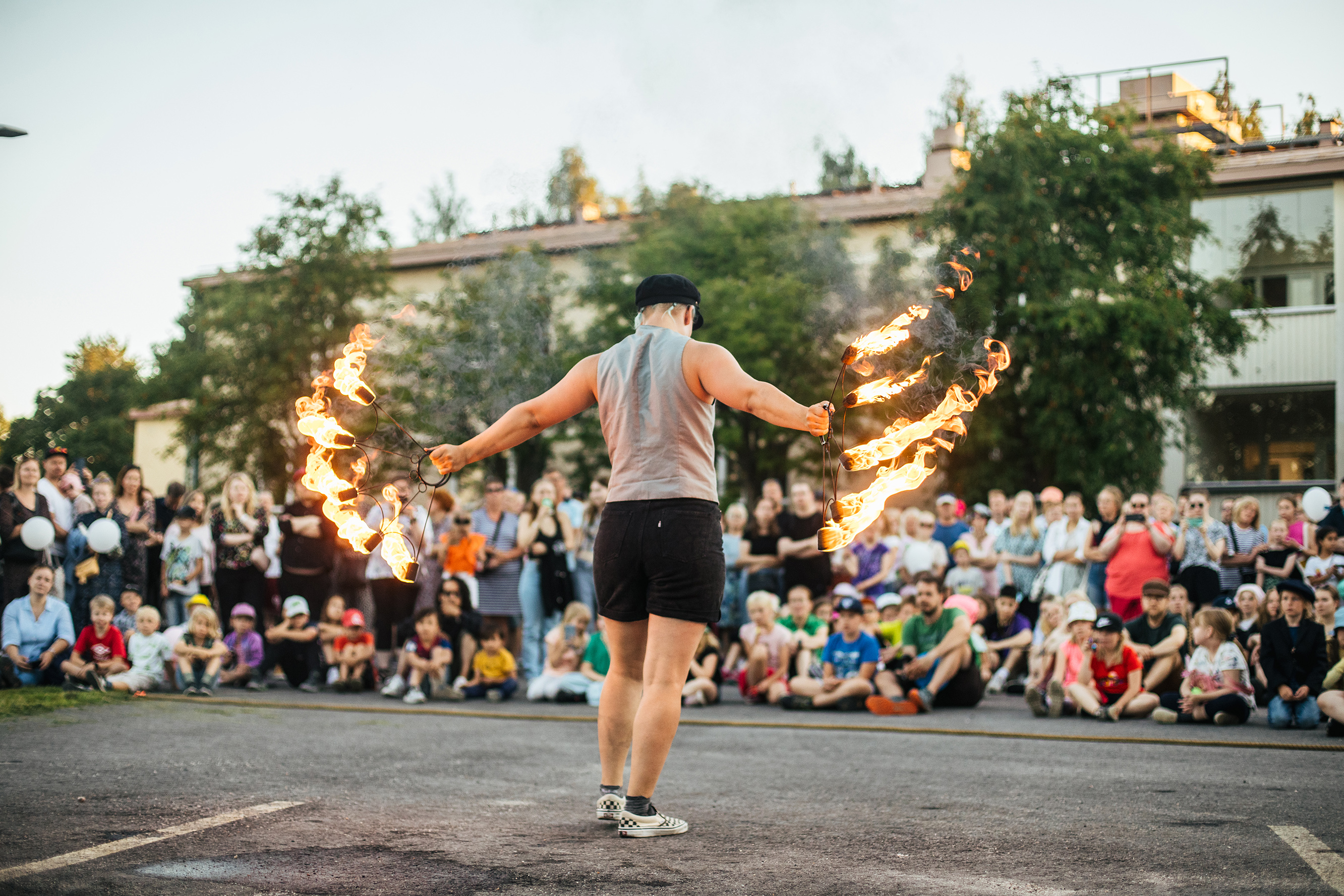
Happening in Tuusula
Tuusula is known for its active event calendar. Our municipality’s lively village communities, numerous museums and countless events keep things buzzing all year round. Are you considering organising your own event? Here you will find information about organising events in Tuusula. As the event organiser, you are responsible for ensuring that all arrangements and necessary permits and notifications are taken care of well in advance of the event.
We compiled this guide in 2018 and updated it in 2020, 2021 and 2025.
Tuusula Cultural Services
040 314 3435, 040 314 3437
kulttuuri@tuusula.fi
Event organiser’s checklist
You will find a summary of the information on this page here.
Event concept development
Consider the following questions:
- Why, when and where is the event being held?
- Who is the event aimed at?
- What kind of programme is there at the event?
- What is the name of the event?
Division of labour and scheduling
Areas of responsibility: Who does what?
Schedule: When do things need to be ready? (Also take into account the schedules for permits.)
Financing
Who is responsible?
- event budget
- acquisition of partners/sponsors
- applying for grants and subsidies
- any other possible sources of income (e.g. lotteries, paid sales outlets, food sales)?
Permits and notifications
Always check the necessary permits, notifications and their schedules with the authorities.
It is advisable to be prepared for at least the following notifications and attachments:
- map of the event area (attached to the rescue plan)
- notification of a public event to the police (subject to a fee)
- permit to use the venue or area
- safety and rescue plan if the estimated number of visitors to the event is 200 or more.
Communication and marketing
Communication channels include social media, websites, event pages, local newspapers and posters.
It is worth considering in good time:
- Which communication channels best reach your target group?
- What is a marketing budget?
- Who is responsible for communications and marketing, and for producing the necessary materials?
Event breakdown
It is a good idea to plan the dismantling of the event in advance and to set a schedule and assign responsibilities:
- When will it be dismantled?
- Who is responsible for dismantling?
- Who handles the retu of rental or loan equipment?
- Who is responsible for cleaning the area?
Event planning
Let your imagination run wild! The purpose of brainstorming ideas for the event is to come up with a variety of thoughts and suggestions, which can then be narrowed down as necessary. It is a good idea to start planning the event early, as good planning is half the battle.
During the brainstorming phase, it is a good idea to consider answers to at least the following questions:
- Why is the event being organised? What are its main objectives?
- Where will the event be held?
- What is the budget for the event?
- When will the event take place and how long will it last?
- What kind of programme is available there?
- Who is the event aimed at (target group)?
- How does the working group operate, and what resources are available?
- How does your event compare to other similar events?
- What are the effects of the event on, for example, local activities, well-being and the community?
- What grants can be applied for and who are the partners?
- How is the success of an event measured?
- How and where will the event be visible?
Date of the event
Tuusula hosts a variety of cultural events for different target groups throughout the year. Many factors can influence the timing of your own event, such as the timing of similar events or holiday periods.
Feel free to contact other organisers as well.
Organising an event in collaboration with other actors, organisers and associations is often a good idea. For example, Tuusula Week is an excellent time for an event. You can find more information about Tuusula’s annual events in the Tuusula event calendar.
Annual cultural events in Tuusula
Tuusula Week
Tuusula Week is celebrated around 22 July, Tuusula Day. Cultural Services markets the events collectively. Add your event to the Tuusula event calendar by 15 May, and we will include it in our joint communications.
Tuusula Arts Night
Culture and art take centre stage at Tuusula Arts Night. Held on the second Friday of August every year, the event offers culture and art for all ages throughout Tuusula. Add your event to the Tuusula event calendar by 15 May, and we will include it in our joint communications.
Who is the event organised for?
In order for an event to be considered successful, it is essential to attract an audience. It is therefore important to consider in advance who the event is aimed at and to identify the specific characteristics of certain target groups:
- Who is this event intended for?
- How large an audience can be expected?
- Could the audience also come from places other than Tuusula?
- How does the audience get to the event? What about during the event?
Responsibility of the event organiser
The event organiser is responsible for the event as a whole and for its safety.
As the organiser of the event
- You are responsible for all traffic arrangements and safety measures, as well as any notifications and permits required by the authorities for the event.
- You are responsible for the costs of the event, including software, technology and security.
- You will be responsible for cleaning up the area after the event and keeping it tidy during the event.
- be liable for any damages
- ensure that your activities do not obstruct the passage of emergency vehicles or vehicle and pedestrian traffic
- ensure that the event does not cause unreasonable disturbance to the environment.
Among other things, the use of green areas for sales, traffic or parking is strictly prohibited.
Choosing the venue
When choosing a venue, you need to consider what best suits the nature and needs of the event. Things to consider include the target audience, the time of the event, audience access to the area and possible noise pollution:
- Is your event suitable for outdoors, indoors, or both?
- How large an audience can be expected?
- How does the audience arrive at the event?
- How should the space be accessible?
- Are temporary structures required for the event?
- Will electricity or water be required at the event?
- Is bicycle parking or car parking required?
- Are there any restrictions regarding noise at the venue?
Premises available for rent in the municipality of Tuusula
The municipality of Tuusula has a wide range of facilities that you can book for events, hobbies or meetings.
Use of common areas
The public areas of Tuusula municipality are actively used by residents. In the town plan, a public area refers to an area designated as a street, square, park, recreational area or similar area.
Organising cultural events in public areas always requires permission from the landowner. Always submit your permit applications well in advance, but no later than 21 days before the planned activities, via the Lupapiste.fi service.
Parks and market squares suitable for events
- Anna Park (Toimelantie 1, 04500 Tuusula)
- Kellotori (Vanha valtatie 197, 04500 Tuusula)
- Kaukjärvenranta (Kirkkotie 34, 04300 Tuusula)
- Jokipuisto (Hyryläntie 04300 Tuusula)
- Lilly Kajanus-Blenner Park (Lillynkuja, 05400 Tuusula)
Electricity is available in these areas for event purposes. However, please remember to mention your electricity needs in your permit application and ensure that it is available. It is also possible to organise events in other parks and public areas.
Exceptions
- Sports facilities: Reservations for sports facilities in the municipality of Tuusula, such as sports halls, must be made using an electronic application form.
- We recommend sending requests for advice conce ing street or park areas via Lupapiste. If necessary, requests for advice can be converted into actual applications.
Area planning
Area planning plays an important role in choosing a venue. As the event organiser, you must ensure the safety of the facilities, structures, buildings and outdoor areas used for the event. The following issues, among others, must be taken into account in the area planning for the event:
- the original purpose of the area/location and its suitability as an event venue
- maximum number of people at an event
- movement of the audience (arrival, movement within the area, departure)
- places where large crowds of people may gather
- planning of maintenance and rescue routes and areas
- the durability, fastenings and positioning of temporary structures such as tents, stages and grandstands
- the impact of the event on the surrounding area.
Area map
A map of the event location must always be drawn. Initially, this can be a rough guide, but towards the end, the details must be refined. During the permit phase, a map with as much detail as possible must be submitted to the authorities. Maps available from the Tuusula map service, for example, can be used as a base map.
The following must be marked on the area map:
- stages and auditoriums
- event area boundaries and access routes to the area
- exit routes, possible parking and streets to be closed
- various activities, such as food stalls, sales points and activity points
- info and ticket sales
- first aid station
- firefighting equipment
- Toilet facilities and, if necessary, waste bins
- emergency exit.
A detailed area map is intended for the event production team and authorities. A map intended for the general public can be simpler.
Event budgeting
Draw up a budget well in advance, at the early stages of planning the event. The budget should list all income and expenditure. It is worth bearing in mind that unexpected expenses may arise during the event, so it is a good idea to set aside a little extra for such situations.
Example of a budget
Revenue (estimate/actual)
- ticket revenue
- grants
- paid sales locations
- lotteries, sales proceeds
- sponsorship money
- other income.
Expenditure (estimate/actual)
- rent
- structures (stage, tent and other structures)
- fu iture (tables, benches and other fu iture), signs, decorations
- technology (sound, lighting and other technology)
- waste management (waste bins, portable toilets)
- electricity, water
- performance fees, travel expenses
- marketing and communications (posters, social media advertising and other marketing)
- licence fees
- emergency medical services
- security
- catering
- other expenses.
Tuusula municipal grants
In the municipality of Tuusula, grants are awarded by the municipal council and the education and culture committee, the culture and leisure committee, the welfare and health promotion committee, and the technical committee.
Other grants
You can also apply for grants from other sources, such as foundations and funds. Among others, the SKR Uusimaa Fund supports art-related projects, events and cultural occasions that are based in or organised by Uusimaa. The Tiedejatutkimus.fi website lists Finnish funding opportunities for science and the arts. The website directs you to the funders’ own websites.
Event safety
As the organiser of a public event, you are responsible for ensuring that the event is held safely. The event must not pose a danger to people, property or the environment. The safety of events is regulated by various laws and regulations. The notifications and plans made on the basis of these regulations encourage event organisers to consider the dangers and risks involved in the event. Event safety includes public safety, fire safety, first aid, crowd control, crime prevention and food safety.
The event organiser is responsible for obtaining permits, submitting notifications and preparing a safety and rescue plan. If the event does not have the necessary permits, the police have the right to suspend the event. Always check the permit application deadlines with the issuing authority!
Notification of a public event
As a general rule, public events must be reported in writing to the police in the place where they are held.
Not all public events need to be reported. Often, the nature of such events is such that they do not cause any inconvenience to bystanders or the environment, and no special traffic arrangements are required. The location of the event or the small number of participants may also be grounds for not reporting the event.
Find out well in advance what attachments are required for the public event notification. Usually, the attachments required include at least a map of the event area, a permit to use the public area, proof of liability insurance, an approved rescue plan and a list of security guards. Other possible attachments include: a decision on traffic controllers, a traffic control plan and a permit to close the traffic lane, an approved waste management plan, certificate of approval for temporary structures, certificate of approval for food sales, certificate of approval for first aid arrangements, decision issued on the basis of a noise notification, copy of the liquor licence or report on the organisation of liquor sales, and Teosto music performance licence number.
Rescue plan and first aid
A rescue plan must be drawn up for public events or events where
- estimated to be present at the same time at least 200 persons
- use open flames, fireworks or other pyrotechnic products, or chemicals that pose a fire or explosion hazard as special effects
- the exit arrangements at the venue differ from the usual ones
- the nature of the event poses a particular risk to people
- is temporary accommodation for more than 20 people (e.g. school accommodation).
A rescue plan must be drawn up for public events, and for events with more than 2,000 people, a first aid plan must also be drawn up. The event organiser must ensure that adequate first aid facilities are available at the event.
First aid preparedness for smaller events (fewer than 2,000 people) is described in the rescue plan. The name, telephone number and first aid training details of the person responsible for first aid are recorded in the rescue plan. You can order first aid services for your event from your local Red Cross branch, for example, and ask them for help in drawing up a first aid plan.
Plans must be submitted to the Central Uusimaa Rescue Department no later than 14 days before the event.
In addition, the rescue services recommend that a rescue plan be drawn up in the following cases:
- The event will be attended by over 100 people belonging to special groups (young children, the elderly, people with reduced mobility or other special groups).
- The event is held indoors in a venue not designed for public events, and the audience exceeds 100 people.
Noise notification and outdoor sale of food
Noise notification
The event organiser must submit a written notification of the event causing temporary noise to the municipal environmental protection authority no later than 30 days before the event.
Food exports
Private individuals and organisations are not required to submit notifications or provide information on activities that pose a low risk to food safety. Low-risk activities include school or association sales, organising coffee service, grilling sausages or smoking salmon at sporting events, selling home-baked bread at the market, and so-called pop-up restaurants. The sale and serving of food must comply with legal requirements. Professional sellers must report their own activities.
For further information, please contact the Central Uusimaa Environment Centre.
Insurance
The event organiser is responsible for the event and its safety. You can obtain information from insurance companies and the police about whether your event requires insurance. The police may also require proof of liability insurance. For further information, please contact the Easte Uusimaa Police Department on 0295 434 900 on weekdays between 8 a.m. and 11 a.m.
Tuusula Municipality’s insurance policies do not cover your event. You are always responsible for insuring your event yourself, even if it is held on property owned by Tuusula Municipality or in outdoor areas. The municipality’s insurance policies also do not cover your event during Tuusula Week or Tuusula Arts Night.
Security
As a rule, security personnel must be arranged for public events. Security personnel must be approved by the police and hold a valid security guard licence. The police will determine the number of security personnel required based on factors such as the size and nature of the event.
The names of security guards and their security guard card numbers shall be specified in the emergency plan. The security plan shall specify the names of security guards, their personal identification numbers and security guard card numbers, as well as their numbers and locations within the event area.
For more information on the permit procedure, please contact the Easte Uusimaa Police Department at 0295 434 900 on weekdays between 8 a.m. and 11 a.m. The national police advisory service is available at 0295 419 800 on weekdays between 8 a.m. and 4.15 p.m.
Other permits and notifications
Other permits and notifications that may be required:
Safety is the co erstone of the event
By familiarising yourself with event safety, you can enjoy the event you are organising without any worries, as you will have taken everything into account in advance.
We recommend that you familiarise yourself with the comprehensive guidelines on event safety available on the Tukes website.
Implementation of the event
As the event organiser, you are responsible for all traffic arrangements and safety measures, as well as any notifications and permits required by the authorities for the event.
Event infrastructure
Electricity
Events require electricity for sound equipment and lighting, for example. It is important to note that a standard power socket is not always sufficient; larger devices require three-phase current (16A).
Consider in advance where electricity will be needed at your event and make a list of the activities that require electricity. With this list, professionals will be able to estimate your electricity consumption and ensure that enough electricity is reserved for your event.
Special attention must be paid to electrical safety at outdoor events. Electrical equipment must be protected from rain and vandalism. Electrical cables must be kept away from walkways and, if necessary, protected with anti-runover guards. Electrical installations may only be carried out by a professional.
For further information, please contact the venue manager.
Water
If food is sold or served at your event, water must also be provided on site. The tap at the water point must be designed so that users do not need to touch the spout. For example, manually adjustable shower heads should not be used at domestic water distribution points.
If wastewater is generated during the event, ensure that it is discharged into the sewage system or otherwise treated appropriately. Water discharged into the storm sewer system will flow directly into the water system.
The locations of water points and further information on water matters will be provided by the party responsible for the event venue.
toilet facilities
Public events must have sufficient toilet facilities, which must be located appropriately within the event area. There must be signs indicating the location of the toilet facilities. Toilets or their immediate vicinity must have hand washing facilities or other adequate hand hygiene facilities.
Number of toilet facilities
Valvira recommends calculating the number of toilet facilities at public events based on the number of participants. The event venue must have a sufficient number of toilet facilities with hand washing stations. Indoor venues intended for events often have a sufficient number of toilet facilities. Toilets must be reserved for the event area in accordance with the list below. Deviations from the dimensions may be made if the nature or location of the event so requires.
Less than 50 participants: 1 toilet for women, 1 toilet for men and 1 toilet for people with reduced mobility
51–250 participants: 2 toilets for women, 2 toilets for men and 1 toilet for people with reduced mobility
251−500 participants: 3 toilets for women, 2 toilets for men and 1 toilet for people with reduced mobility
501−750 participants: 5 toilets for women, 4 toilets for men and 1 toilet for people with reduced mobility
751−1,000 participants: 6 toilets for women, 5 toilets for men and 1 toilet for people with reduced mobility
more than 1,000 participants, + 1 toilet for every 250 participants, except for persons with reduced mobility + 1 toilet for every 1,000 participants
Waste management and cleaning
As the event organiser, you are responsible for keeping the event area and its surroundings clean during and after the event. The area must have a sufficient number of covered waste bins, which must be placed in appropriate locations, depending on the nature of the event.
If the venue is littered before the event, the organiser must contact the party responsible for the venue. If necessary, be prepared to clean the area yourself before the event begins. It is also advisable to clean the venue during the event to keep the area pleasant. It is a good idea to decide in advance when cleaning will take place and who will do it.
Waste bins
The number of waste bins required depends on the amount of waste generated at the event. At an event where food or drink is served, the amount of waste generated can be estimated based on the number of visitors as follows: 50–110 grams of waste per visitor. We recommend that the number of waste containers be calculated slightly on the high side. Waste bins must be placed and maintained in such a way that they do not cause odours or other health hazards and that animals cannot access them. It is recommended that waste bins be placed in the event area in the food and drink area, on the main walkways and close to any spectator areas.
Waste separation
At all public events where food is served to the public, at least the following types of waste must be separated from other municipal waste and placed in their own collection containers:
- biowaste, if at least 25 kilograms of it is generated during the event
- cardboard packaging and cardboard, if at least 25 kilograms of it is taken out of use during the event
- glass packaging, if at least 25 kilograms of it is removed from use during the event
- metal packaging, if at least 25 kilograms of it is removed from use during the event
- plastic packaging, if at least 15 kilograms of it is removed from use during the event.
A waste management plan must be drawn up for public events with more than 5,000 participants and submitted to
the municipal environmental protection authority at least two weeks before the event.
Temporary structures
You may need temporary structures for public events, such as tents, grandstands and stage structures, sound and lighting structures, and various fences and barriers. All structures used at events must be durable, safe and suitable for their intended use. They must comply with existing safety requirements, such as building regulations and the installation and operating instructions provided by the manufacturers.
The structures most commonly needed for events, such as tents, stages, benches and tables, can be rented from various operators. The municipality of Tuusula has a community lending library available to residents, which stocks some of the items needed for events, such as tents.
Identify the high-risk structures used at the event in the safety plan and the requirements for their inspection, servicing and maintenance. The structures used at the event must be erected in such a way that they can withstand unexpected weather conditions. The service provider responsible for the stage is in charge of erecting the stage structures, but as the event organiser, you are responsible for ensuring that the structures are durable.
Communication and marketing
Good marketing channels include the local newspaper Keski-Uusimaa, the Tuusula event calendar and other event calendars.
Press releases can be sent to the Keski-Uusimaa newspaper at toimitus.keskiuusimaa@media.fi. Instructions for writing a press release can be found below.
You can create your own account for the Tuusula event calendar.
Social media plays an important role in event communication. There are several groups on Facebook where events can be advertised, for example: Tuusula, Tuusulalaisten ilmoitustaulu (Tuusula notice board), Jokelalaisten ilmoitustaulu (Jokela notice board), Kellokoskelaisten ilmoitustaulu (Kellokoski notice board) and Happenings@Tuusula.
Posters, brochures and flyers can be distributed on public notice boards. In addition to some shops and cafés, these can be found, for example, in Tuusula municipal libraries and swimming pools.
Preparing a press release
A good press release grabs the reader’s attention and gets them interested in the topic. The headline should be concise, to the point and appealing. The headline must not be misleading, so remember to stick to the facts. Put the news itself at the top of the release and leave the background information at the end. Be clear and specific. Avoid overly fancy imagery or challenging sentence structures.
The press release must include the time and place of the event. Include the name, title, email address and telephone number of a person who is easily reachable and can answer any additional questions about the event. You can use a photo from a previous event in the press release. Always remember to check with the photographer and everyone who is recognisable in the photo whether the photo can be used for marketing purposes!
After the event
Among other things, the following matters must be taken care of after the event:
- dismantling of the event venue (dismantling of structures, removal of fu
iture and other
items) - cleaning the venue and removing waste
- emptying and removal of toilet facilities and waste bins
- retu of rented equipment and fu ishings
- key retu
- payment of invoices and fees
- organising a debriefing meeting and gathering feedback
- reporting on the use of grants and submitting receipts to grant providers
- post-event communication to participants
- thanking the working group.
It is a good idea to hold a debriefing meeting with the staff after the event. All those involved in organising the event should be invited to the meeting: volunteers, your own staff and partners. As the organiser, remember to express your gratitude to the contributors and the audience.
This content has been translated using AI