Our Vanhakylä School
On this page, we provide more information about Vanhankylä School and its practices.
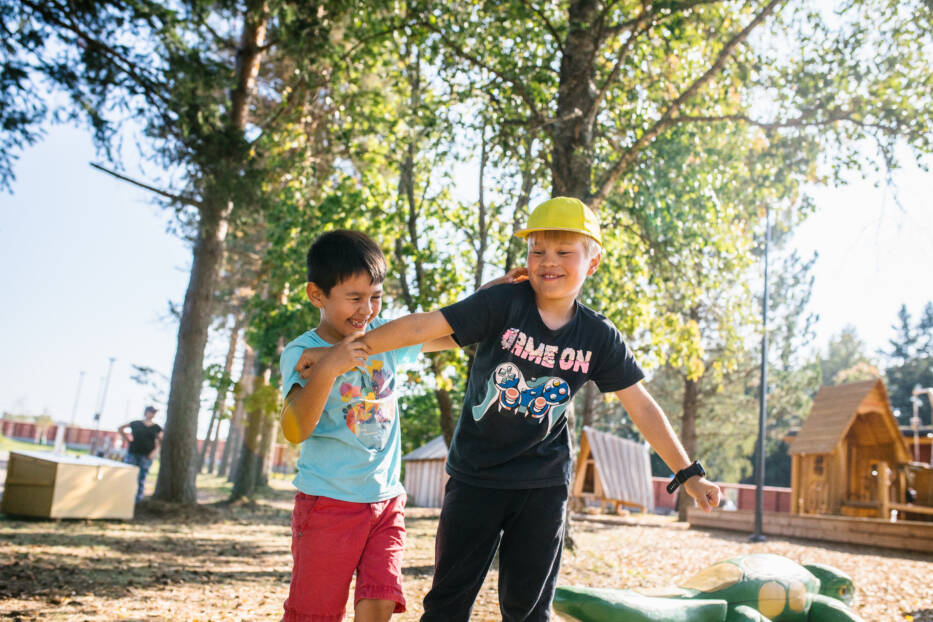
In the 2025–2026 school year, Vanhankylä School will have 48 pupils in basic education.
Communication with the school
We use Wilma for communication between home and school(switch to another service). The best way to contact teachers is through Wilma.
The email addresses of teaching staff are in the format etunimi.sukunimi@tuusula.fi. See the teaching staff’s contact details for more information!
Rules and regulations
Purpose and application of the rules of conduct
- The purpose of the rules and regulations is to promote order within the school, the smooth running of studies, and the safety and comfort of the school community.
- The rules and regulations apply at school and when pupils participate in school activities outside school.
- The Basic Education Act obliges everyone in basic education to comply with school rules.
Pupils’ rights and responsibilities
- Pupils have the right to free basic education, equal and fair treatment, personal freedom and integrity, and protection of their private life.
- Every pupil is treated equally and grows up in a tolerant school community. Bullying is addressed in accordance with the practices agreed upon at the school.
- Pupils have the right to receive instruction on all school days, the right to a safe lea ing environment, and other benefits and services specified in legislation.
- Pupils of compulsory school age are obliged to attend school until they have completed their compulsory education.
- It is the pupil's duty to perform their tasks conscientiously and behave appropriately.
- Students are obliged to attend classes unless they have been granted permission to be absent.
Safety, comfort and unimpeded lea ing
Good behaviour
- Students must behave in accordance with good manners and follow instructions.
- Students must be considerate of others in all situations; by allowing others to work and study in peace, treating others with respect and greeting them, and ensuring that no one is left alone.
- Students shall observe netiquette and copyright laws when completing student assignments.
- The student follows good table manners.
- Washes his hands when entering the dining room.
- Talks quietly.
- Uses a knife and fork.
- Take food in moderation and try everything.
- Cleans food scraps from plates.
- Come to the dining room at the agreed time.
- Students dress appropriately and suitably for school.
- Students must be punctual and adhere to agreed times.
- Students are not permitted to publish photographs or videos taken of other individuals without their consent in any media or other public forum.
- Students must maintain good hygiene and healthy lifestyles.
Staying and moving around
Breaks
- spent in a separately agreed break area in the schoolyard
- only climbing on the climbing frame
- An adult retrieves the ball if it goes over the road (with the supervisor's permission and under their supervision, a pupil may retrieve a ball that has gone over the fence, provided it has not gone onto the road).
- physical integrity
- everyone is included in the game
- follow the common rules of the game
- appropriate language towards adults and other children
- all adults at school are obeyed
- Mobile phones are not to be used during breaks or anywhere else on school grounds.
- The hat is used if the icon appears in the window.
- Pupils are not allowed to leave the school premises during the school day without a valid reason related to teaching or other justified reasons.
Keeping things tidy and looking after the environment
- Students must take good care of school property, lea ing materials and their own belongings, and respect the property of others.
- Littering is prohibited at school. All pupils are responsible for cleaning up after themselves.
- The pupil is obliged to compensate for any damage caused. The pupil must clean up any mess they have made or tidy up any school property they have left in disorder.
Safety
- The pupil must report any safety-related faults or deficiencies to an adult member of the school staff.
- Sports equipment must be stored in designated areas.
- Throwing snowballs or similar objects in the schoolyard is not permitted.
- There is CCTV surveillance on school grounds.
Use of computers, mobile phones and other mobile devices
- Mobile phones or other mobile devices (e.g. smartwatches) may not be used during lessons, except with the teacher's permission for lea ing purposes or with the headteacher's or teacher's permission for personal healthcare or as an assistive device. During lessons, the use of personal mobile devices is only permitted for study-related tasks with the teacher's permission. The use of personal mobile devices is prohibited throughout the school grounds during meals, breaks and while waiting for transport. Personal mobile devices must be kept in the student's backpack during the school day (including any after-school clubs). Students must ensure that their devices are set to silent mode (no sound or vibration) during the school day.
Intoxicants and dangerous objects
- Bringing dangerous objects or substances intended to cause damage to property or people to school is prohibited by law.
- Teachers and the head teacher have the right to inspect students' belongings. The head teacher or teacher may confiscate disruptive or dangerous objects or substances if necessary.
Discipline
- Disciplinary measures and reprimands prescribed by law shall be applied in cases of breaches of the rules of conduct.
- The head teacher and teachers have a duty to report any harassment, bullying or violence that has come to their attention at school or on the way to school to the guardian and/or other legal representative of the pupil who has committed the offence and the pupil who has been the target of the offence.
Monitoring and reviewing rules and regulations
The rules and regulations are displayed on the school premises. They are available to guardians in electronic form.
The rules of procedure shall be reviewed as necessary.
School lessons and breaks
1st lesson 8:00–8:45 a.m.
break time 8:45–9:00
Lesson 2, 9:00–9:45 a.m.
break time 9:45–10:00
Lesson 3, 10:00–10:45
lunch and break from 10:45 to 11:15
4th lesson at 11:15–12:00
break time 12:00–12:15
Lesson 5, 12:15–13:00
break time 13:00–13:15
Lesson 6 at 13:15–14:00
break time from 2:00 p.m. to 2:15 p.m.
Lesson 7 at 2:15–3:00 p.m.
School working days and holidays
Afte oon club
Vanhankylä School does not currently have its own after-school club. Pupils are transported to the after-school club at Perttu School.
Prevention and investigation of bullying
Vanhankylä School’s plan for preventing bullying
What is bullying?
Bullying can be physical, psychological, or both at the same time. One of the most important characteristics of bullying is that it is continuous. Individual disputes are not bullying, and these two situations must be clearly distinguished from each other.
Bullying is therefore repetitive and systematic; it is not rough play. Bullying often occurs in groups, so it is also a group phenomenon.
Most commonly, bullying manifests itself verbally, such as name-calling, mocking or making fun of someone. However, bullying can take many other forms, i.e. it can be physical (shoving or hitting), targeting property (taking or deliberately destroying belongings) or indirect (manipulating group members, spreading malicious rumours or lies, or excluding someone from the group). This form of bullying is particularly prevalent today in the form of cyberbullying.
Bullying does not always take place during school hours. Schools have no practical means of monitoring what happens on the way to and from school. However, schools will intervene if they become aware of bullying taking place on the way to school.
Bullying that occurs during leisure time is not within the school’s jurisdiction, but falls under the responsibility of the pupils’ guardians to investigate and supervise.
Objectives
The aim is that
students
- get along with each other
- know that no form of bullying is acceptable
- accept differences
- practise interaction skills
- accept everyone as their colleague and neighbour
- bear joint responsibility
- know how to deal with bad feelings and aggression in a way that does not harm themselves or others
- lea to face adversity and conflicts and resolve them without adult help
- know what to do if they are bullied or witness bullying.
parents
- Parents are responsible for raising their children and strive to teach them how to resolve conflicts by setting an example.
school staff
- preventive work
- Teaching emotional and interpersonal skills and addressing safety issues in the classroom before problems arise. This reaches all pupils and is an effective way of preventing bullying.
- Positive feedback on successful behaviour is key to supporting behaviour.
- Strengthening pupils' self-image by utilising strength-based pedagogy
- Investigating cases of bullying
- early identification and effective intervention in bullying situations
- talking to students individually
- whole group discussion
- Reports sent to homes via Wilma. In addition, discussions by telephone if necessary.
- Agree on follow-up with the home, the group and the bullies.
- penalties for bullies
- supporting the bullied
- individual support, necessary treatment, other measures and follow-up
- supporting the bully
- help the bully to free themselves from their role as a bully
If the bullying continues:
- cooperation with the necessary student welfare staff and authorities
- the information is recorded
- inform the headmaster
- disciplinary discussions, involving the head teacher, student welfare services/other school staff as necessary
- the parties and their guardians to the school for a discussion
- Agree on 1-3 behavioural goals with the pupils. Also agree on disciplinary measures and rewards for success.
- Regular monitoring and continuation of measures until the situation calms down. Cooperation with guardians throughout.
Supporting pupils
Student welfare work refers to all activities that support the school day and everyday studying. The school has a student welfare team (OHR), which is a multi-professional working group. The head teacher chairs the student welfare team.
The principal, a special needs teacher with a broad range of expertise, the school psychologist, the school counsellor, the school nurse and the teacher of the class or pupil in question participate in the OHR’s activities at Vanhankylä School. All classes are reviewed once a year by the student welfare team together with the class teachers. Parents are also welcome to discuss matters conce ing their own children with the OHR. The time for the discussion will be agreed separately.
The student welfare team’s task is to support high-quality basic education and a good school day, to nurture a culture that promotes growth and development, and to organise and provide students with support related to school attendance when needed.
School health care
School health care supports the growth and development of children and young people and aims to contribute to the development of values and attitudes that promote health. Health examinations are carried out annually for pupils, and health monitoring visits are carried out as necessary. If necessary, the school nurse provides acute care to pupils who fall ill during the school day and administers first aid in the event of accidents. However, actual medical care is not part of school health care but is provided at health centres.
School nurse Susanna Korva: contact via Wilma, email susanna.korva@keusote.fi or telephone 050 497 0030.
Dental care for primary school pupils
All pupils in grades 1, 3 and 5 undergo an oral health examination and receive a treatment plan at the PopUp dental clinic at the school. After the PopUp examinations, pupils attend a health promotion session in small groups. The topic of the session is dental self-care.
In addition, pupils are invited to dental clinics for oral health examinations according to their individual needs.
If your child needs treatment, your home will be notified of the treatment time. Follow-up treatments are always carried out at the dental clinic. Parents are responsible for transporting their children to the dental clinic.
Emergency dental services
Emergency dental services for those requiring urgent treatment (e.g. accidents, pain) operate by appointment and always require contacting the centralised dental care appointment service on 019 226 0700.
School meals and special diets for pupils
Parents are responsible for notifying the school of any special dietary requirements. Please contact the school nurse (contact details in the School Health Care section), who will forward the information about special dietary requirements to the municipal Food Services. Please note that the diet can be implemented two days after the notification has been received by the school kitchen.
Our school also offers a vegetarian option every day.
Read the(switch to another service) Tuusula municipality’s guidelines on special diets(switch to another service)!
Hobbies and club activities
Schools in Tuusula organise hobby and club activities. Information about these activities is provided via Wilma. School hobby calendars(switch to another service) can also be found on the municipality’s website.
Check out the hobby calendars(switch to another service).
Hobby and club activities are organised on the premises of schools and other operators, as well as online.
Plans
Academic year plan
The academic year plan is available to guardians in Wilma.
Equality and non-discrimination plan
Tuusula’s school-specific functional equality and non-discrimination plan is a tool that supports the promotion of gender equality and non-discrimination in all school activities. The plan ensures that systematic work is done in schools to promote equality and non-discrimination.
For equality work to be successful, it is important that it is based on the needs of the school and its pupils. A functional equality plan is always drawn up in cooperation with the school staff and pupils.
The equality situation at Vanhankylä School has been assessed from the perspective of guardians through a guardian survey on the quality of basic education, most recently in spring 2025. Pupils in grades 1–6 were asked to complete the Pulssi well-being survey, which examined their experiences of equality at school and in their own class community. Based on the surveys conducted among pupils
and guardians, the equality situation at Vanhankylä School is at a good level.
There are no weighted classes at Vanhankylä School. Teaching is organised according to the neighbourhood school principle.
In all subjects, grouping is based on pedagogical grounds, without gender division.
Support is allocated to groups according to their needs. Pupils are assessed in accordance with the principle of equality.
Gender equality issues are discussed with pupils during school hours, and we take preventive action against inappropriate and disruptive behaviour and sexually suggestive language.
Development measures chosen by the school
The following principles are central to Vanhankylä School:
Intervening in offensive speech, reducing it, and practising appropriate language use for the situation.
Physical integrity for all.
Discrimination on the basis of gender or other personal characteristics, such as age, origin, language, religion, belief, opinion, sexual orientation, health status or disability, is not permitted at our school.
Lost property
Lost property at our school is stored in the shoe hall. It is a good idea to label clothing! If found clothing has a name on it, we will endeavour to retu it to the pupil.
The lost property box is emptied once or twice a year for clothing collection. This is done after the Christmas and spring celebrations, so parents should check the lost property box at the latest during these celebrations.
More valuable items found, such as watches, jewellery, keys and mobile phones, are taken to the staff room.
This content has been translated using AI